

Ecosystem services are the essential benefits that nature provides to support the health and well-being of both people and wildlife. These include resources like food and clean water, natural processes such as climate mediation (helping regulate temperature and carbon), storm water absorption (reducing flooding), and air and water purification. They also play a crucial role in supporting human mental, psychological, and social health by offering spaces for recreation and connection with nature, while providing vital habitats for wildlife. Beyond these direct benefits, ecosystem services have tremendous financial value for cities and local communities, saving millions of dollars by reducing the need for expensive infrastructure and public health interventions. In short, investing in ecosystem services creates a healthier, happier, and more prosperous future for everyone.
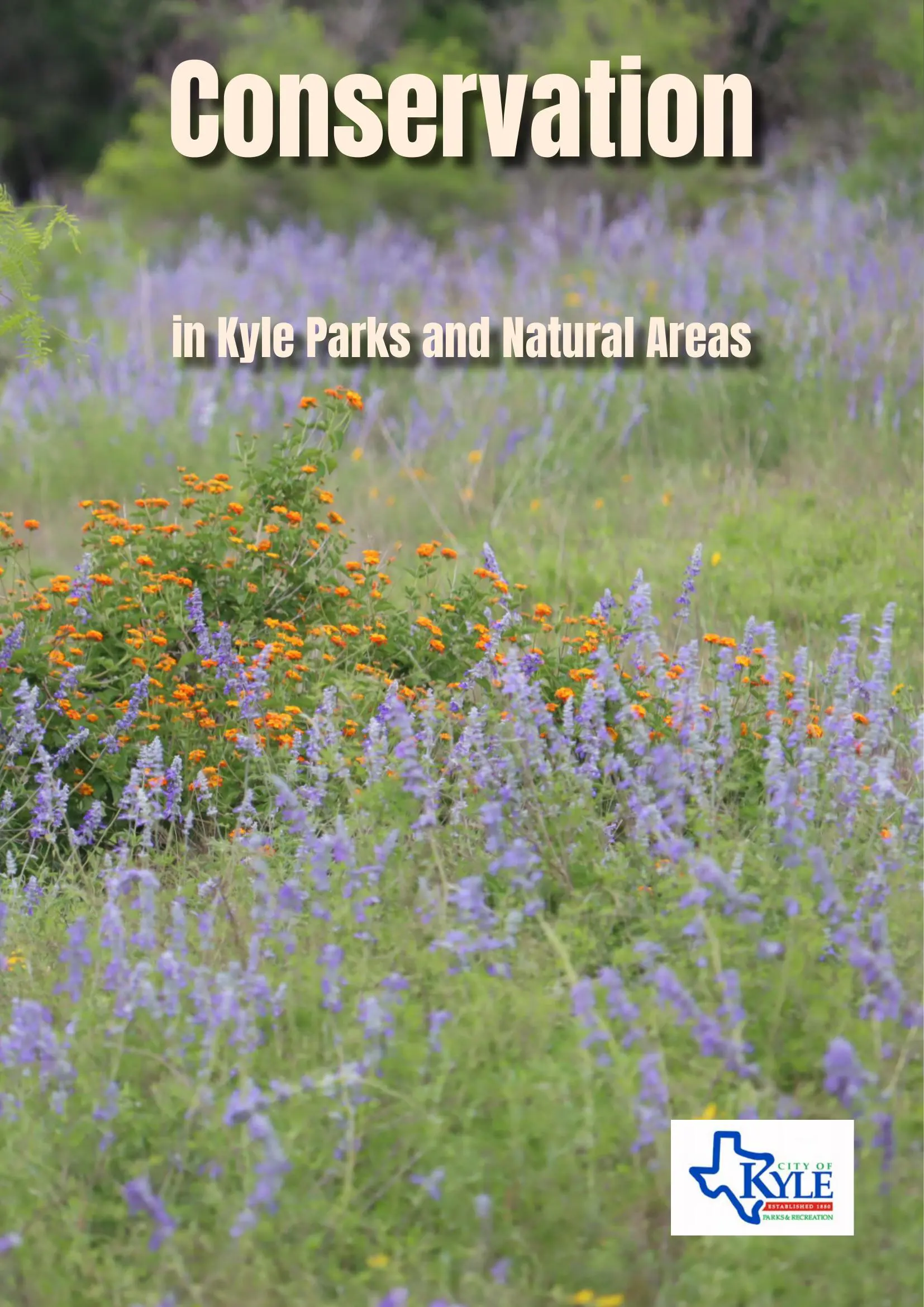
Conservation
The Conservation Division protects and enhances the natural areas within Kyle’s park system, using science-based land management to support healthy soils, clean water, native plants, and local wildlife. Our team restores habitats, maintains ecological service areas, improves trails, and leads projects that strengthen the environmental resilience of our growing community. We work to ensure that Kyle’s parks remain vibrant, sustainable, and welcoming places for residents to explore and enjoy.
Land Management Strategies


The Conservation Division uses a science-based approach to care for Kyle’s parks and natural areas. These strategies focus on building healthy ecosystems that support native plants and wildlife while improving water quality, reducing long-term maintenance costs, and creating resilient landscapes for the community.
Ecological Service Areas (ESAs)
Kyle’s parks use a three-tier ESA system to match land management to the level of public use.
-
Tier 1: Small, curated native plantings in high-use areas.
-
Tier 2: More natural transitional zones with flexible maintenance.
-
Tier 3: Large areas managed to function like self-sustaining native habitats.
These zones reduce mowing, improve stormwater absorption, support biodiversity, and strengthen ecological resilience.
Habitat Restoration
Restoration efforts focus on repairing degraded landscapes by:
-
Replacing exotic or invasive plants with local native species.
-
Improving soil health and stabilizing eroded areas.
-
Reintroducing plant diversity that supports pollinators, birds, and other wildlife.
-
Managing vegetation to encourage natural regeneration.
Restoration also reduces exotic rodent pressure by restoring native predators and limiting the simplified, human-food-driven conditions where commensal rodents thrive.
Strategic Mowing and Vegetation Management
Mowing patterns are adjusted to support ecological health while maintaining a clean appearance near homes and trails. Strategies include:
-
Reduced mowing in ESAs and grow zones to promote wildflowers and habitat complexity.
-
Maintaining mowed buffer strips along property edges for neatness, safety, and visibility.
-
Allowing seasonal growth of stems and fallen leaves to support overwintering pollinators.
Invasive Species Management
The division actively identifies and removes invasive plants like Ligustrum and KR bluestem. Management methods include:
-
Mechanical removal of invasive trees and shrubs.
-
Targeted herbicide applications when necessary.
-
Long-term monitoring of treated areas.
Controlling invasive species improves fire resilience, restores ecological stability, and protects native plant communities.
Trail and Access Management
Trails are maintained to protect sensitive habitats while ensuring visitor safety. This includes:
-
Temporary trail closures after storms, flooding, or restoration work.
-
Repairing erosion damage and restoring vegetation along trail edges.
-
Managing vegetation to keep trails clear and accessible.
Wildlife Support and Habitat Structure
Land management enhances habitat for native wildlife by:
-
Retaining snags and decaying wood where safe to support birds, insects, and small mammals.
-
Creating structural diversity using grasses, shrubs, and wildflowers.
-
Encouraging natural predators such as hawks, owls, and dragonflies that help maintain balanced ecosystems.
-
Minimizing pesticide use to protect pollinators and beneficial insects.
Stormwater and Soil Health
Native vegetation plays a major role in reducing runoff, improving water infiltration, and strengthening soil structure. Strategies include:
-
Using deep-rooted native grasses and plants to filter and absorb water.
-
Stabilizing stream banks and wetland edges.
-
Enhancing soil organic matter to increase water retention and reduce flooding risks.
Ecosystem Service Area (ESA) FAQs
What is an Ecosystem Service Area (ESA)?
An ecosystem service area in a city park, greenbelt, or natural area, is a space specifically designated and managed to provide key ecosystem services for the community. These are spaces that “pay us” rather than cost us. The city of Kyle has developed a 3-tiered system of ESAs that allows for differentiated management strategies tailored to specific parks and zones.
Tier 1 ESA — These areas are found in spaces with high levels of human activity and are designed to complement active recreation and social gatherings. Tier 1 zones provide modest ecosystem services and are typically smaller patches featuring carefully designed native landscaping. Tier 1 ESAs will receive a high level of ongoing curation to preserve their intended aesthetic and ecological functions. Parks like Mary Kyle Hartson, which are heavily used for gatherings and events, may have a high percentage of Tier 1 areas to complement their social character. In contrast, other parks may have few or no Tier 1 areas, depending on their primary use and design goals.
Tier 2 ESA — These areas are less formally designed and more natural in character compared to Tier 1. They are typically located next to areas with moderate human activity within parks, serving as a transition between highly active spaces and more natural zones. Management of Tier 2 areas is more flexible, allowing native vegetation to grow more freely. However, regular maintenance will still be necessary to prevent plants from encroaching on trails, play areas, or other park facilities, ensuring those spaces remain accessible and welcoming to visitors.
Tier 3 ESA — These areas are dedicated to supporting natural processes as fully as possible to maximize ecosystem services for the community. The primary focus is on fostering healthy, self-sustaining ecosystems. Management in Tier 3 areas will be strategic, mainly targeting the control of invasive species and promoting native habitat restoration and biodiversity enhancements. These spaces are intended to function as rich natural sanctuaries within the urban landscape.
Will ESAs be implemented in all areas of parks?
No, ESAs will not be implemented uniformly across all park areas. The 3-tiered system is designed to appropriately pair ESAs with varying intensities of human use. Some parks may not have ESAs. Some may only have Tier 1 areas. Some may only have Tier 3. Some may have a mix of all 3 tiers within the park boundaries.
Will recreation be allowed within ESAs?
Tiers 2 and 3 allow for compatible recreation. However, Tier 1 ESAs will likely be landscape beds or other small areas surrounded by high levels of human activity and active recreation. So, recreation within a Tier 1 ESA will likely not be physically possible due to limited size, but Tier 1 ESAs will likely be surrounded by active recreation or active social activity.
No, the city will continue to maintain sports fields and high-use areas with regular mowing and upkeep. The ESA strategy applies only to designated zones within parks. This approach balances the need for recreational spaces with ecological restoration efforts.
Will ESAs increase the risk of fire damage to surrounding homes or properties?
No. Establishing ecological service areas in city parks, especially when restored to healthy native ecosystems with thoughtfully maintained buffer strips, does not inherently increase the risk of fire damage to surrounding homes.1 Furthermore, the active removal of exotic and invasive species like Ligustrum and KR bluestem helps lower overall fire risk. Restoring ecosystems to diverse native plant communities typically promotes patchier fuel structures and encourages species that are more fire-resilient, thereby improving overall landscape health and resilience. These practices not only support biodiversity and ecological services but also integrate proven wildfire mitigation approaches recognized in urban natural area management.
References
1. Handel, S.N., Saito, O., & Takeuchi, K. (2013). Restoration Ecology in an Urbanizing World. In Urbanization, Biodiversity and Ecosystem Services (pp. 665–693). Springer.
No. Exotic rodents are commensal, meaning they live and thrive alongside people, preferring human-made environments over natural ones.1 Their numbers are fueled by steady access to human-derived food sources such as pet food, trash, and bird feeders.2,3 Contrary to common belief, mowing city parks does not eliminate exotic rodents. These species flourish in neighborhoods and can persist in highly manicured, exotic plant landscapes within parks as long as human-provided food remains available.1 Native rodents, on the other hand, prefer native habitats, not neighborhoods and mowed park lawns.1 Restoring native habitats in Ecological Services Areas (ESAs) not only helps suppress exotic rodents but also supports native rodent species. These habitats attract and sustain predators like owls, hawks, and foxes, which play a vital role in keeping both exotic and native rodent populations in check. Therefore, the most effective way to reduce or remove exotic rodents from neighborhoods is a two-pronged approach:
- Eliminate access to human-derived food by securing trash, protecting pet food, and cleaning up spilled bird seed.
- Restore native ecosystems in city parks to encourage native wildlife and their natural predators.
References
1. Friscia, A. R., Helman, S., Maloney, M., Molina-Echavarria, A. K., Nugen, S., Punjabi, N., Tweedt, I., & Lynch, J. W. (2023, July 14). Live-trapping of rodents in urban green spaces across Los Angeles. Bulletin of the Southern California Academy of Sciences, 122(2), 122–130. https://doi.org/10.3160/0038-3872-122.2.122
2. Shukla I, Wilmers CC (2024) Waste reduction decreases rat activity from peri-urban environment. PLoS ONE 19(11): e0308917. https:// doi.org/10.1371/journal.pone.0308917
3. Walsh, M. G. (2014). Rat sightings in New York City are associated with neighborhood sociodemographics, housing characteristics, and proximity to open public space. PeerJ, 2, e533. https://doi.org/10.7717/peerj.533
Will creating Ecosystem Service Areas cause an increase in snakes in our yards?
No. Snakes follow their food.1,2,3,4,5 In this case, exotic rodents. Exotic rodent populations peak in neighborhoods because of bird seed, pet food, trash, compost, and shelter under structures, not because of nearby native habitat.6,7 They struggle to survive in healthy native ecosystems.8 By restoring native habitat, ESAs help create a balanced food web. Native predators like hawks and owls naturally keep snake and rodent (exotic and native species) numbers down,9 which reduces the main reason snakes wander into yards. Plus, ESAs are bordered by mowed strips that many animals hesitate to cross.10 Instead of pushing wildlife into neighborhoods, ESAs help keep them in the park, making them a smart, sustainable choice for our city.
References
1. Pitts, S.L., Hughes, B.D., & Mali, I. (2017). Rattlesnake nuisance removals and urban expansion in Phoenix, Arizona. Western North American Naturalist, 77(3), 309–316.
2. Sullivan, B.K., Leavitt, D.J., & Sullivan, K.O. (2017). Snake communities on the urban fringe in the Sonoran Desert: influences on species richness and abundance. Urban Ecosystems, 20, 199–206.
3. Shipley, B.K., Chiszar, D., Fitzgerald, K.T., & Saviola, A.J. (2013). Spatial ecology of Prairie Rattlesnakes (Crotalus viridis) associated with Black-tailed Prairie Dog (Cynomys ludovicianus) colonies in Colorado. Herpetological Conservation and Biology, 8(1), 240–250.
4. Poulin, R.G., Didiuk, A.B., & Wellicome, T.I. (2011). Microhabitat selection by prairie rattlesnakes (Crotalus viridis) at the northern extreme of their range. Journal of Herpetology, 45(3), 363–370.
https://doi.org/10.1670/10-037.1
5. Ackley, J.W., & Meylan, P.A. (2010). Watersnake Eden: Use of stormwater retention ponds by Mangrove Saltmarsh Snakes (Nerodia clarkii compressicauda) in urban Florida. Herpetological Conservation and Biology, 5(1), 17–22.
6. Shukla I, Wilmers CC (2024) Waste reduction decreases rat activity from peri-urban environment. PLoS ONE 19(11): e0308917. https:// doi.org/10.1371/journal.pone.0308917
7. Walsh, M. G. (2014). Rat sightings in New York City are associated with neighborhood sociodemographics, housing characteristics, and proximity to open public space. PeerJ, 2, e533. https://doi.org/10.7717/peerj.533
8. Friscia, A. R., Helman, S., Maloney, M., Molina-Echavarria, A. K., Nugen, S., Punjabi, N., Tweedt, I., & Lynch, J. W. (2023, July 14). Live-trapping of rodents in urban green spaces across Los Angeles. Bulletin of the Southern California Academy of Sciences, 122(2), 122–130. https://doi.org/10.3160/0038-3872-122.2.122
9. Wolf, K. M., Lauenroth, W. K., & Burke, I. C. (2017). Rodent, snake and raptor use of restored native perennial grasslands in the Central Valley of California. Journal of Applied Ecology, 54(4), 1134–1142. https://doi.org/10.1111/1365-2664.12803
10. Carrasco-Harris, M. F., Bowman, D., Reichling, S., & Cole, J. A. (2020). Spatial ecology of copperhead snakes (Agkistrodon contortrix) in response to urban park trails. Journal of Urban Ecology, 6(1), juaa007. https://doi.org/10.1093/jue/juaa007
When and how often will Ecosystem Service Areas be maintained?
Maintenance schedules for ESAs will vary by tier. Tier 1 areas will follow traditional mowing schedules, while Tiers 2 and 3 will have reduced mowing to promote ecological functions. Maintenance activities will be timed to balance ecological benefits with public safety.
How will dead trees and fallen limbs be managed?
Dead trees, or snags, provide important wildlife habitat. However, those posing safety risks near trails or facilities will be assessed and removed as necessary to ensure public safety. Regular inspections will identify hazardous hangers (limbs that have fallen, but remain caught in the canopy), which will be removed to ensure public safety. This maintenance will be part of the city's ongoing commitment to safe and healthy park environments.
How will exotic invasive species be managed?
The city will implement an integrated invasive species management plan, including monitoring, removal, and public education, to manage and prevent the spread of invasive species.
How can residents report a problem related to the Ecosystem Service Areas?
Residents can report issues through the city's official communication channels, such as Kyle 311, or the city’s website. These platforms will be monitored regularly to address concerns.
Will these areas cause an increase in mosquitoes?
Healthy natural habitats, while they do include mosquito populations, also host a wide range of mosquito predators such as dragonflies, amphibians, and aquatic invertebrates, which naturally regulate mosquito numbers.1,2 These ecosystems also promote infiltration of rainfall into the soil through permeable surfaces and deep-rooting vegetation, reducing the presence of standing or ecologically damaged surface water that mosquitoes prefer for breeding.3,4 In contrast, urban neighborhoods often contain artificial containers and built infrastructure that unintentionally provide ideal breeding conditions.4 Common examples include clogged gutters, uncovered trash bins, abandoned containers, rain barrels, and irrigation equipment that collects and holds standing water.5 These environments typically lack natural predators, allowing mosquito larvae to develop unchecked, leading to potentially higher populations and increased disease risk. Moreover, poorly maintained stormwater infrastructure, such as catch basins and storm drains, can hold stagnant water for days or weeks, serving as consistent breeding grounds.4 Even recreational landscapes in parks, including compacted sports fields or overwatered lawns, may develop puddles that persist long enough to support larval development. However, these human-made sources pose a far greater risk than healthy natural habitats. In fact, restoring native ecosystems actively contributes to mosquito control through ecological balance and water management.6
References
1. Chesson, J. (1984). Effect of Notonectids (Hemiptera: Notonectidae) on Mosquitoes (Diptera: Culicidae). Environmental Entomology, 13(2), 531–538.
2. Culler, L. E., & Lamp, W. O. (2009). Selective predation by larval Agabus (Coleoptera: Dytiscidae) on mosquitoes: support for conservation-based mosquito suppression in constructed wetlands. Freshwater Biology, 54, 2003–2014. (University of Maryland)
3. Mastrodimos, A. (2014). Urban mosquito ecology: Effects of socioeconomic status and water quality on larval abundance in container habitats. Cary Institute of Ecosystem Studies REU Program Final Reports. Retrieved from https://www.caryinstitute.org/sites/default/files/public/reprints/mastrodimos_2014_REU.pdf
4. LaDeau, S. L., Leisnham, P. T., Biehler, D., & Bodner, D. (2013). Higher mosquito production in low-income neighborhoods of Baltimore and Washington, DC: Understanding ecological drivers and mosquito-borne disease risk in temperate cities. Ecological Applications, 23(6), 1321–1330. https://doi.org/10.1890/13-0022.1
5. Becker, N., Petrić, D., Zgomba, M., Boase, C., Madon, M., Dahl, C., & Kaiser, A. (2010). Mosquitoes and their control (2nd ed.). Springer. https://doi.org/10.1007/978-3-540-92874-4
6. Dale, P. E. R., & Knight, J. M. (2008). Wetlands and mosquitoes: A review. Wetlands Ecology and Management, 16(4), 255–276. https://doi.org/10.1007/s11273-008-9098-2
Yes. Blending habitat restoration with CPTED (Crime Prevention Through Environmental Design) principles in urban parks is possible through thoughtful design that considers both ecological integrity and public safety. By managing native vegetation through selective pruning and layered plantings, visibility can be improved without clearing critical habitat, aligning with CPTED’s natural surveillance goals while supporting biodiversity.1 Community stewardship, such as nature programming and citizen monitoring, encourages consistent, positive park usage that deters crime and fosters a culture of care.2 With site-specific assessments and planning, we can identify how to preserve natural features while enhancing safety in ways that are ecologically sound and socially inviting.
References
1. Kuo, F. E., Sullivan, W. C., Coley, R. L., & Brunson, L. 1998. Fertile ground for community: Inner-city neighborhood common spaces. American Journal of Community Psychology, 26(6), 823–851. https://doi.org/10.1023/A:1005299902023
2. Alamdari, S. H. 2020. Safer green cities: A study about vegetation impacts on perception of safety in green spaces (Master’s thesis). Politecnico di Milano. Retrieved from https://www.researchgate.net/publication/344137138_Safer_Green_Cities_A_Study_about_Vegetation_Impacts_on_Perception_of_Safety_in_Green_Spaces
3. Arévalo-García, N. A. 2020. Fear-of-crime reduction by environmental design: A CPTED-based framework (master’s thesis). Swinburne University of Technology. https://figshare.swinburne.edu.au/articles/thesis/Fear-of-Crime_Reduction_by_Environmental_Design_FRED_Framework_The_Case_of_an_Australian_Campus/26297566
How You Can Help
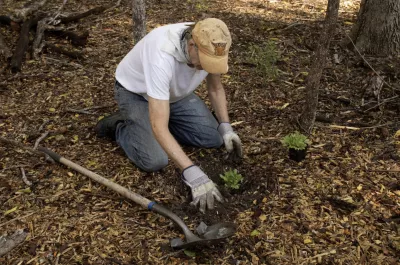
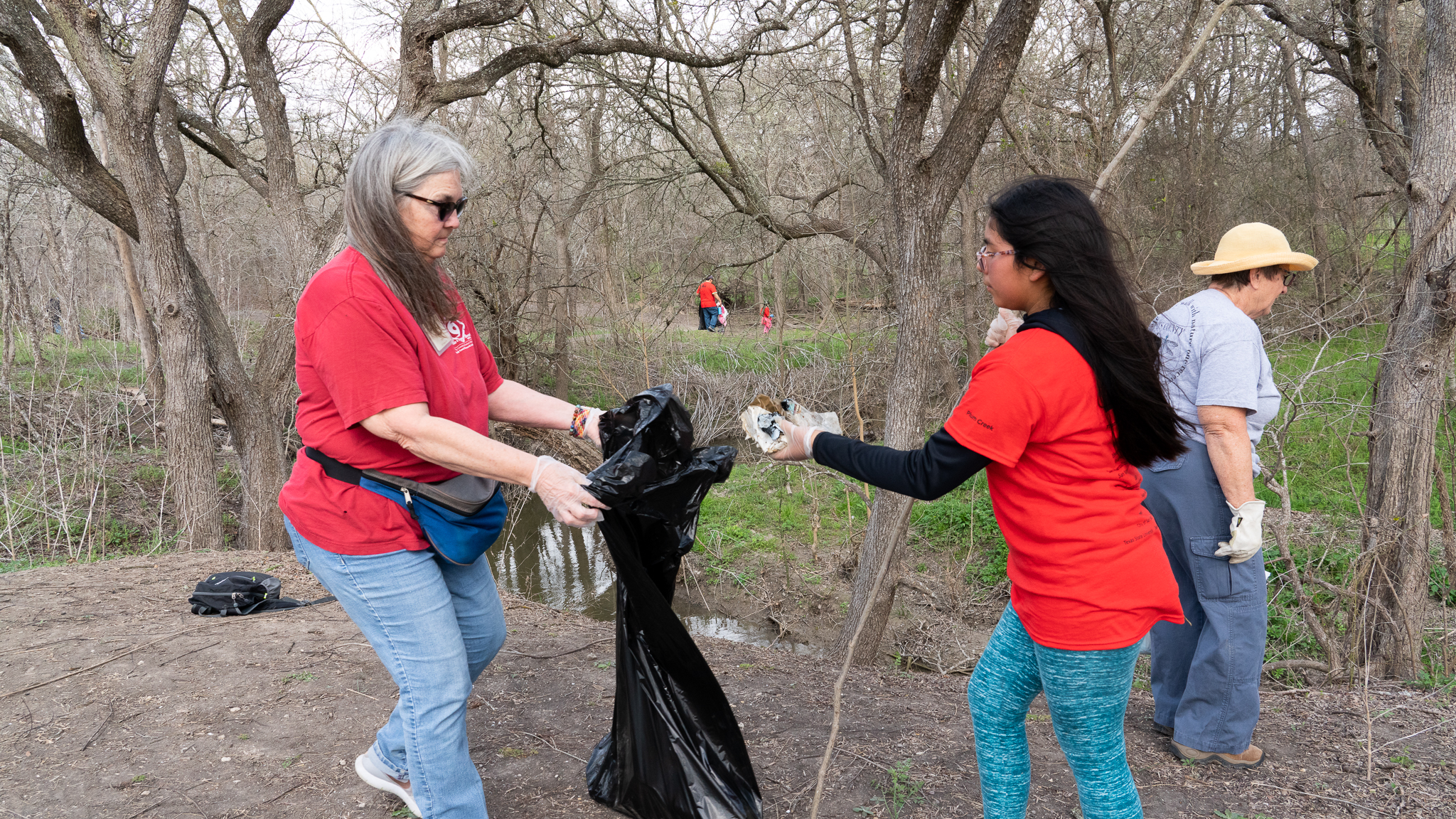
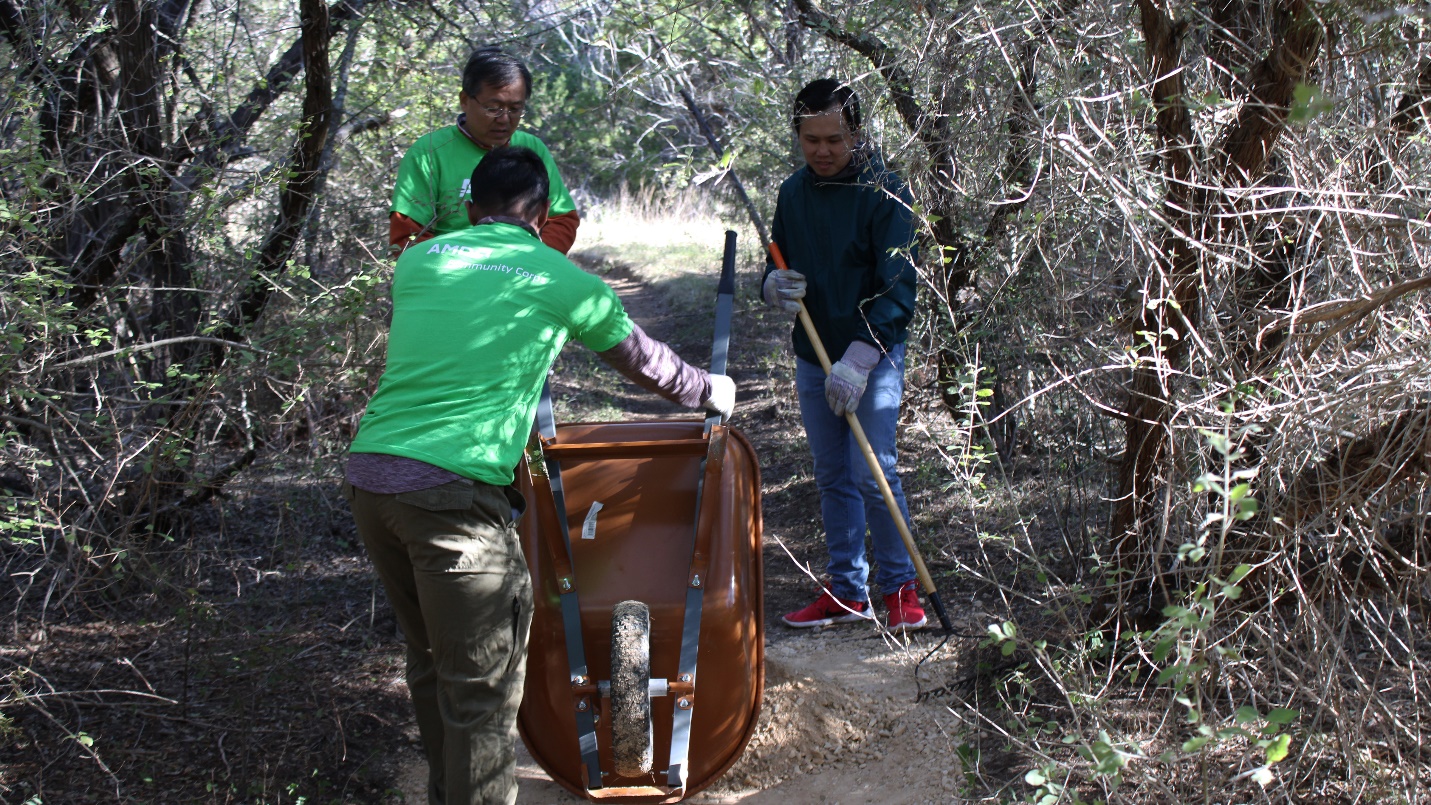
The natural areas in Kyle thrive when the community is involved. Whether you enjoy hiking our trails, gardening with native plants, learning about wildlife, or simply want to give back, there are easy ways to support conservation efforts in our parks. Your time and interest help keep our shared spaces healthy, welcoming, and resilient.
Volunteer on the Trails
Kyle hosts regular volunteer workdays focused on trail care. Volunteers help with litter cleanups, light pruning, invasive species removal, and small maintenance projects that protect our trail corridors. These events are open to all ages and are a great way to enjoy the outdoors while giving back to the community.
Check the Parks and Recreation events calendar for upcoming Trail Stewardship Days. Bring water, sturdy shoes, and a willingness to get your hands dirty.
Join Restoration and Habitat Projects
The Conservation Division offers hands-on opportunities to help restore native habitat, improve soil health, and support pollinators. Projects may include planting local native species, helping maintain Monarch Waystations, repairing erosion problem areas, or caring for ecological service areas.
Workdays are scheduled throughout the year and all tools and training are provided. No prior experience is needed.
Participate in Conservation Connections
Conservation Connections is a public-facing education series that brings the community together to learn about local ecology. Experienced naturalists, habitat specialists, and partner organizations share actionable ways residents can practice conservation in their own neighborhoods. Anyone can attend.
Workshops cover topics like native landscaping, wildlife-friendly practices, water stewardship, and understanding the ecological role of Kyle’s parks.
Become a Master Naturalist Volunteer
Kyle partners with area Master Naturalist groups that support land management, wildlife monitoring, plant surveys, trail work, and public education. Certified volunteers contribute valuable field knowledge and help strengthen our conservation efforts across the park system.
Residents interested in advanced ecological training can join a Master Naturalist chapter and volunteer with the city on approved projects.
Help Keep Wildlife Wild
Small actions at home make a large difference. Residents can support wildlife by planting native species, reducing light pollution at night, removing invasive plants, and avoiding the feeding of wild animals. These steps protect the natural behaviors of local species and help maintain safe, healthy habitats.
Support Clean Parks and Healthy Waterways
Every visit to a park is a chance to help conservation. Pack out trash, pick up litter when you see it, stay on marked trails to protect vegetation, and keep pets on leash in natural areas. These simple habits safeguard native plants, prevent erosion, and maintain the quality of our waterways.
Stay Connected
Want to get involved? Have ideas or want to partner on a project? The Conservation Division welcomes residents, groups, and local organizations who want to support nature in Kyle.
Contact us at Conservation@cityofkyle.com or follow the city’s event calendar for upcoming volunteer opportunities and workshops.

Conservation Publications


Sign up for our Newsletter
Stay up to date on the city's activities, events, programs and operations by subscribing to our eNewsletters.


