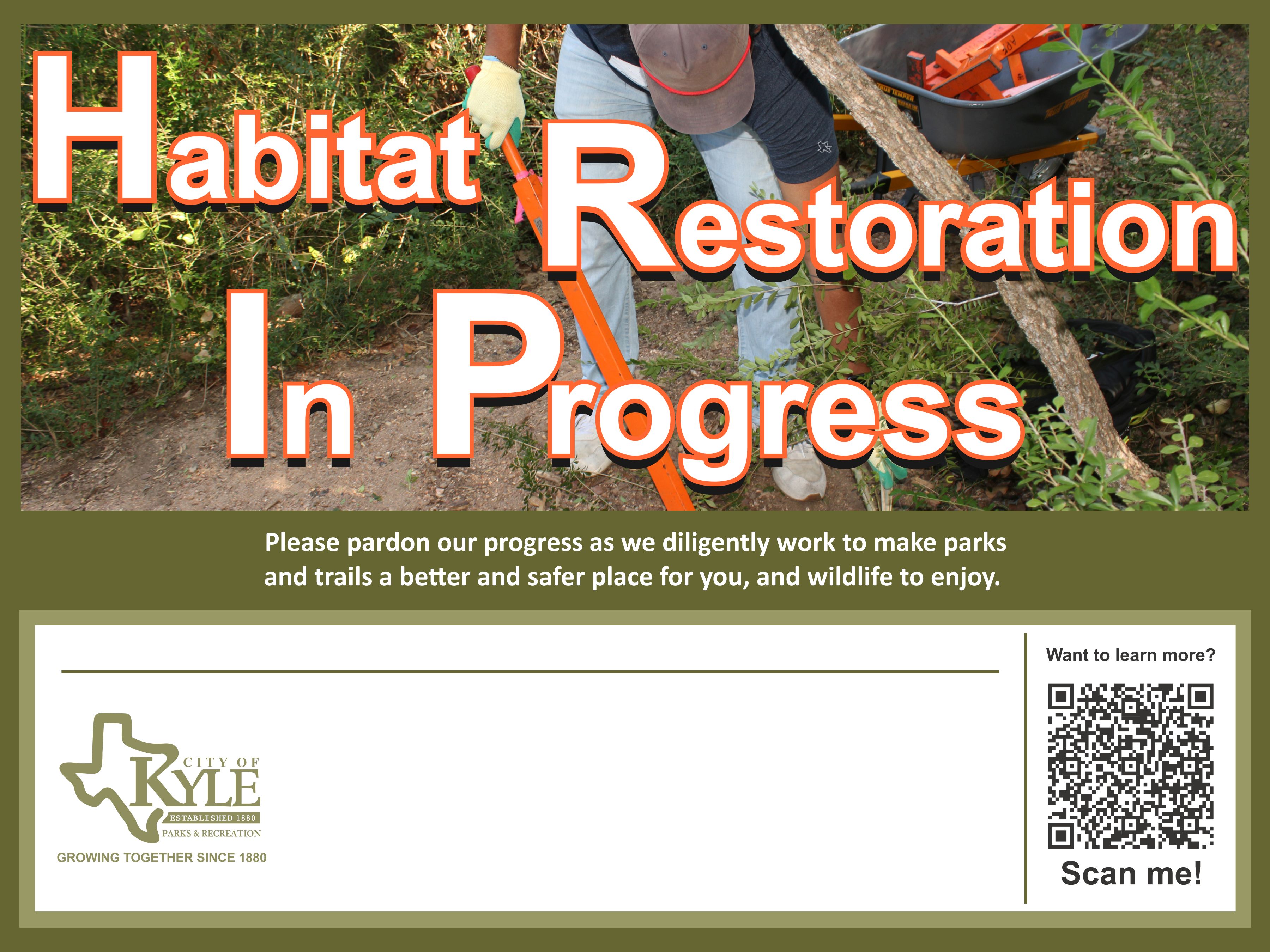
 Habitat restoration is the process of revitalizing damaged or degraded ecosystems to improve their health and biodiversity. It involves reintroducing native plants, improving soil quality, and creating environments that support local wildlife. These efforts help restore balance to ecosystems, ensuring that they can sustain plant and animal life.
 By restoring habitats, we protect vital natural resources, support pollinators, and enhance overall ecological resilience, contributing to a healthier planet for future generations. One may encounter this sign in an area where staff are not mowing to allow plants that are already on site to be identified and help determine the appropriate next steps for restoration efforts.
This sign may also be placed in areas that have been plowed or treated to kill exotic grasses in preparation for re-seeding with native species. One may also encounter this sign where foot traffic is restricted to allow habitat to recover or where invasive exotic trees have been cut for removal.
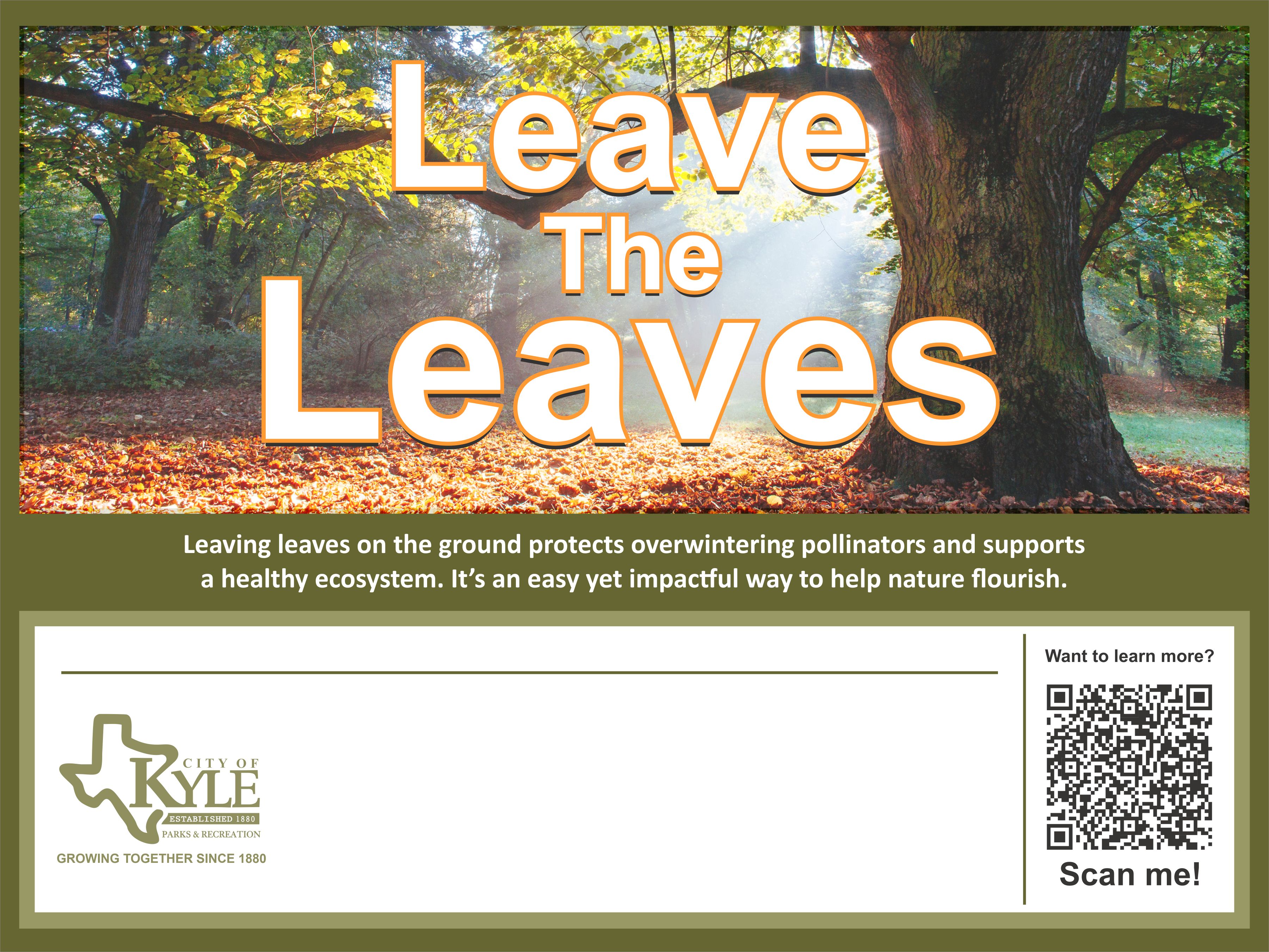 Leaving fallen leaves in place provides a wealth of ecological benefits. This practice supports wildlife, enhances soil health, and provides winter protection for tree roots and overwintering insects.
 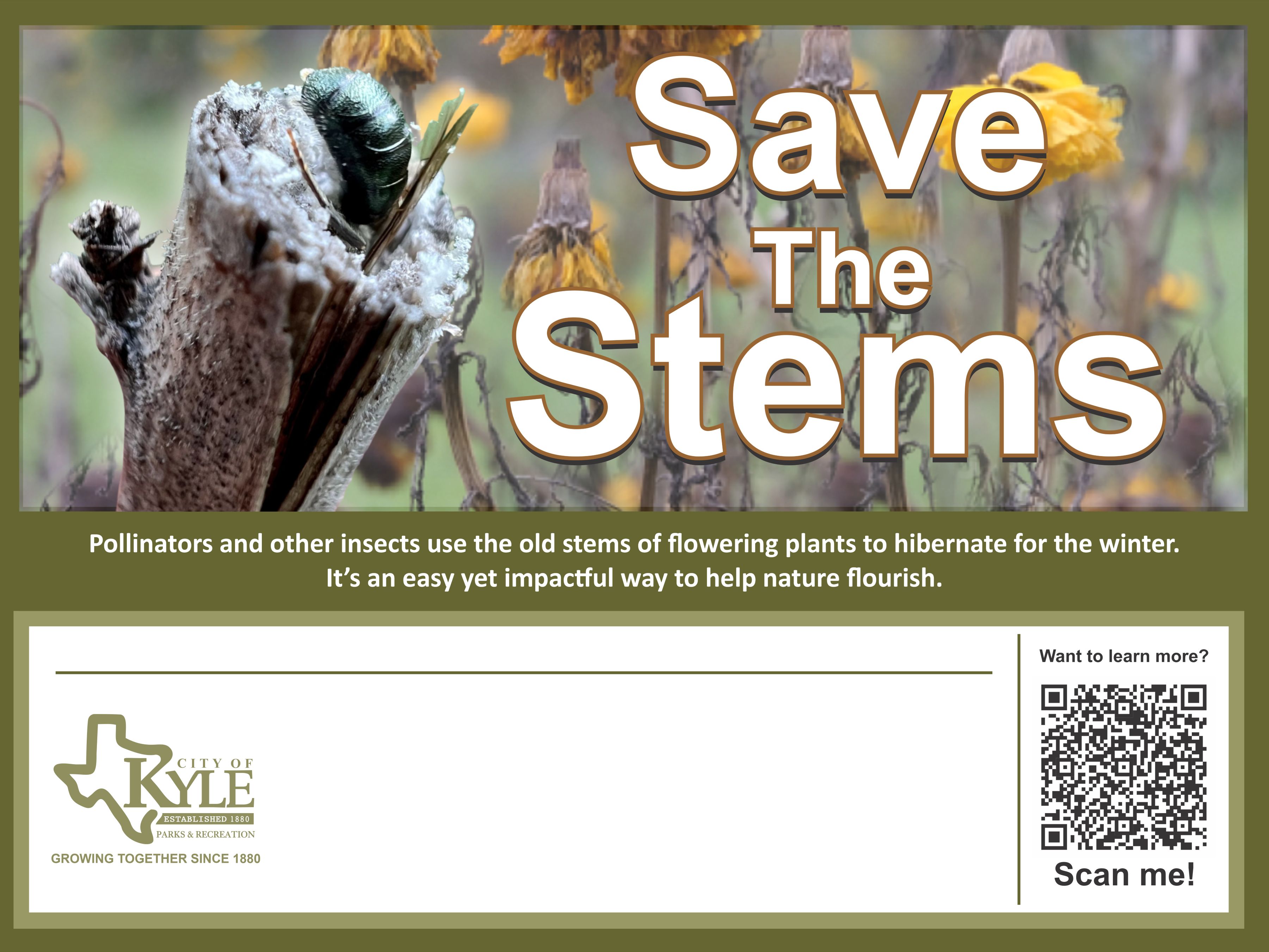 Did you know that many of our native pollinators overwinter as pupae hidden inside plant stems?
 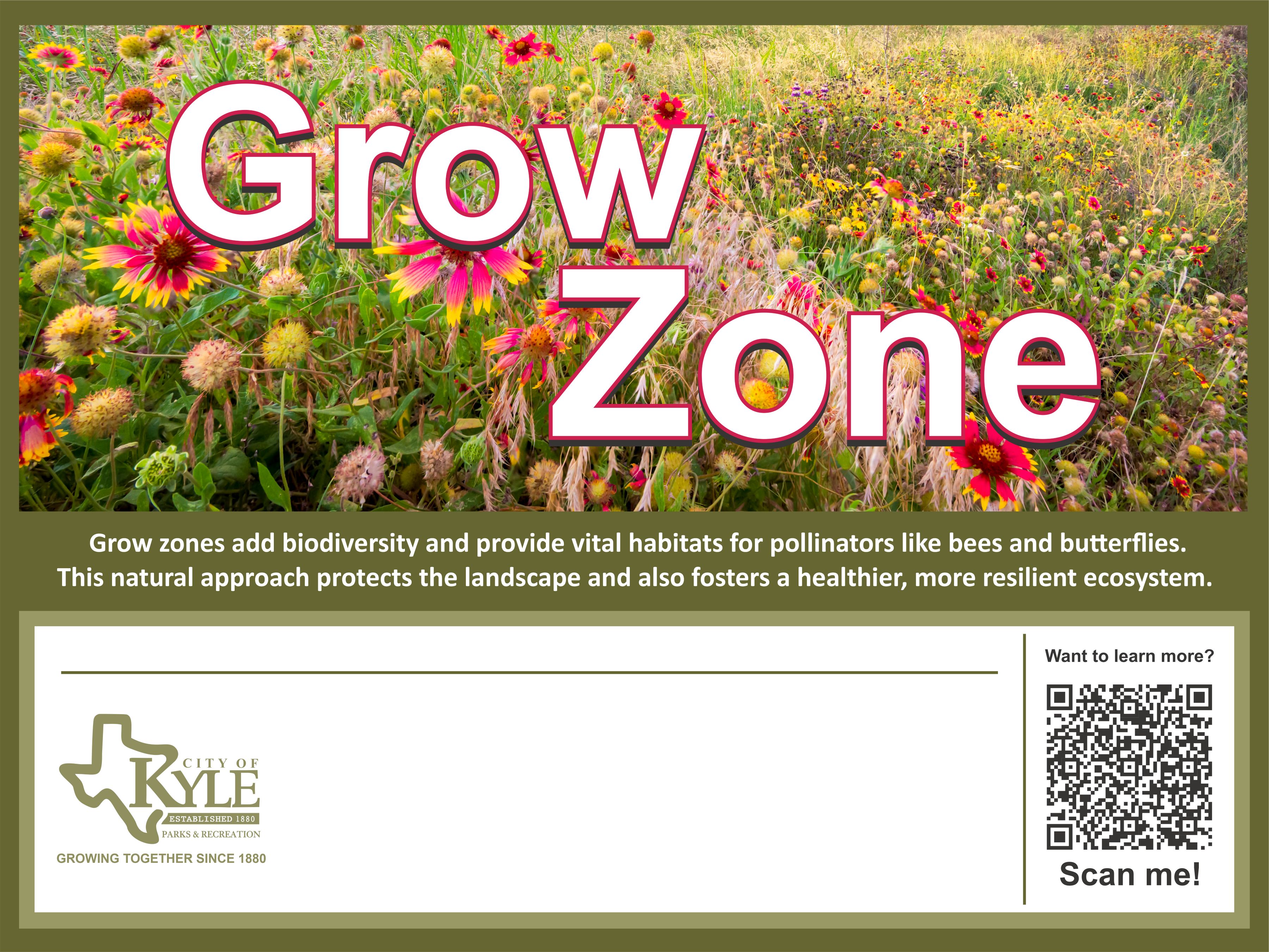 Some areas are deliberately managed with less frequent mowing to allow plants to promote environmental sustainability and support local wildlife. By allowing grass, wildflowers, and other plants to grow naturally, grow zones contribute to biodiversity, soil health, water conservation, and the well-being of pollinators and other wildlife.
 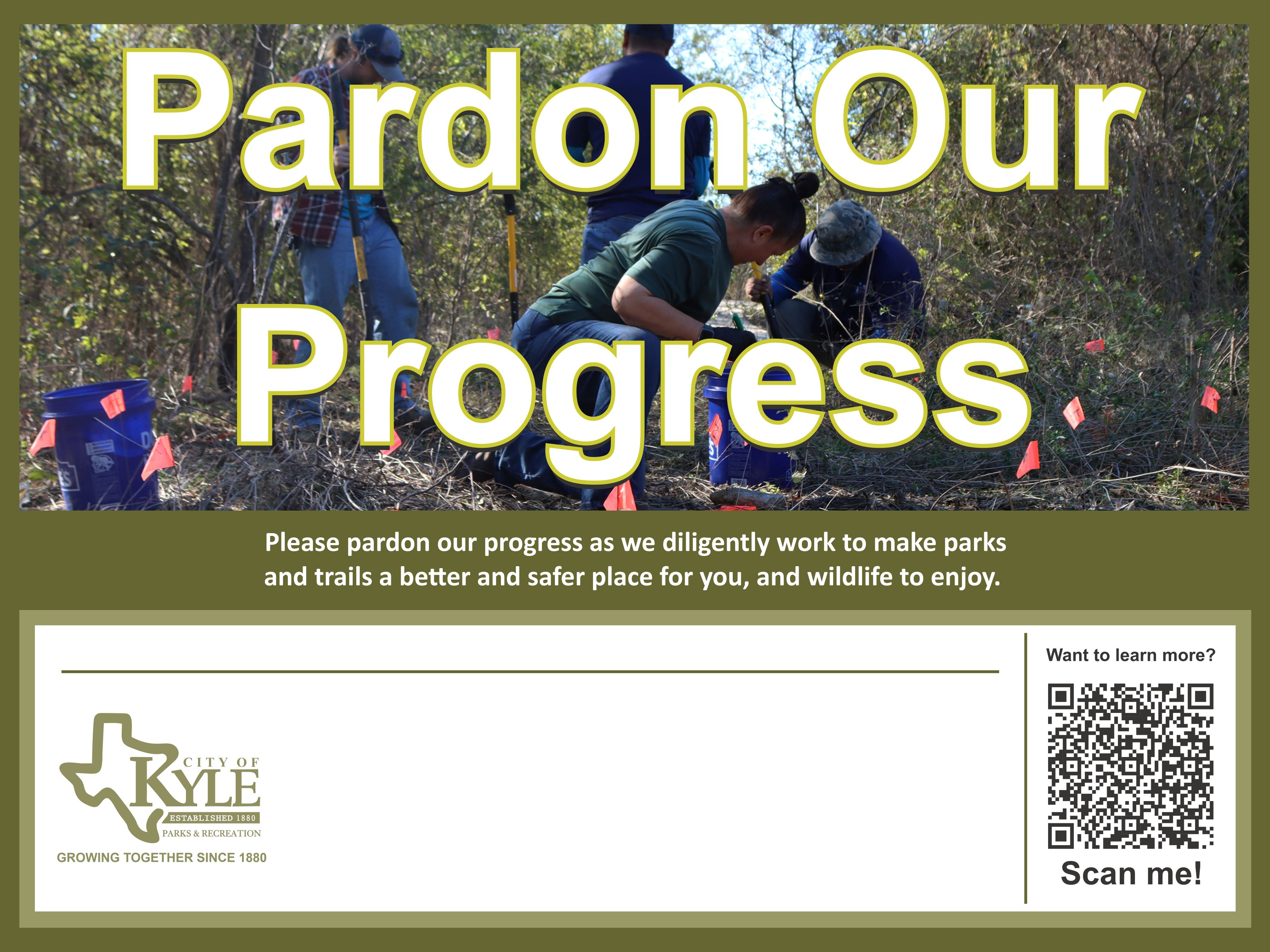 Conservation projects are essential to ensuring the health and sustainability of our environment for future generations.
 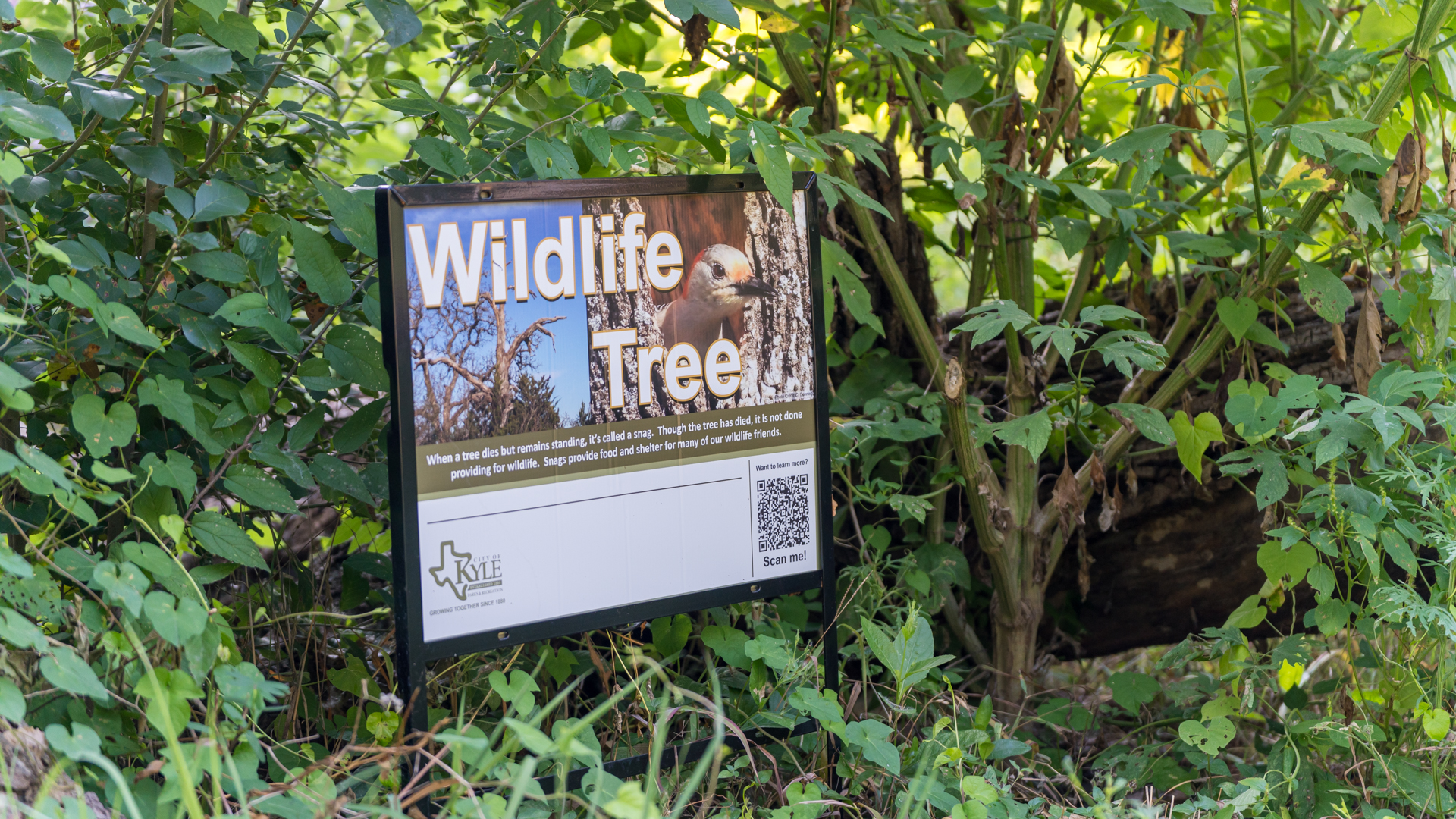 Snags, or standing dead trees, play an essential role in maintaining biodiversity by providing crucial habitat for a wide array of wildlife. While many people view dead trees as undesirable, they are, in fact, vital to numerous species of birds, mammals, insects, and other organisms.
 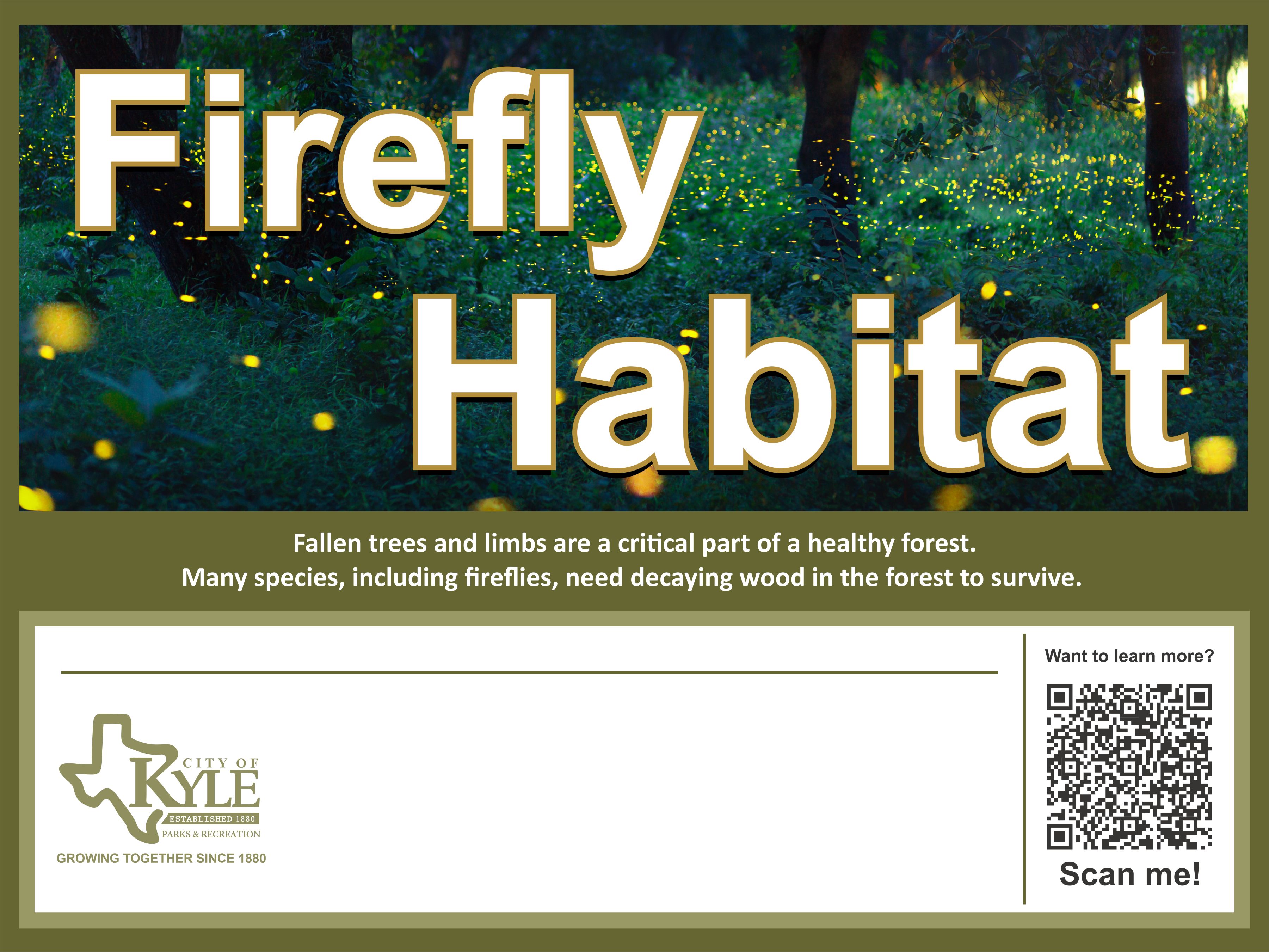 The life cycle of fireflies makes them intricately linked to fallen logs in forests. Such logs provide ideal habitat for firefly larvae, as the decomposing wood attracts a variety of prey (insects, worms, etc.) for them to eat.
 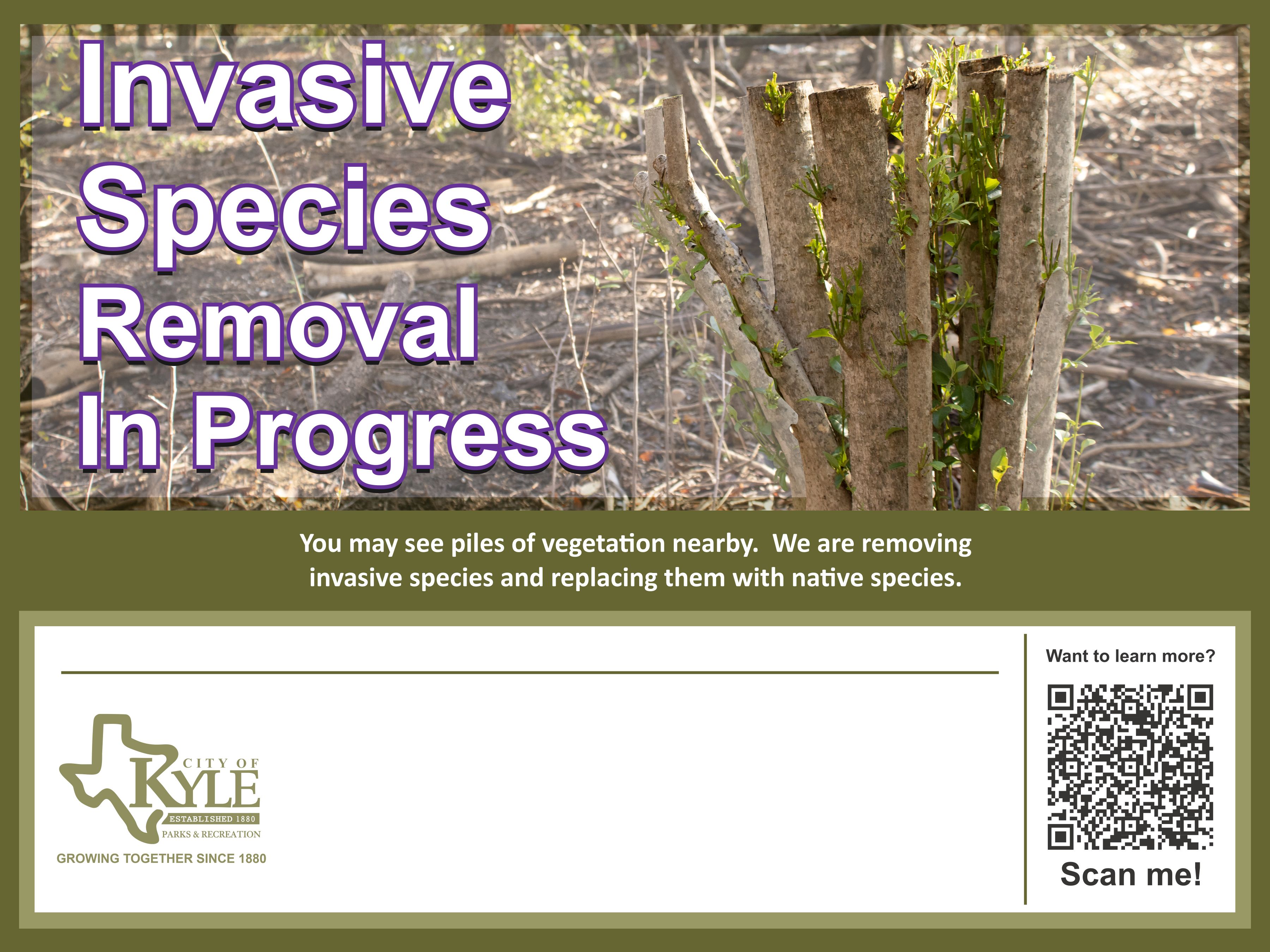 Removing invasive plants is a crucial practice in preserving and restoring the health of ecosystems. Invasive species are non-native plants that spread rapidly, often outcompeting native vegetation for space, sunlight, and nutrients.


