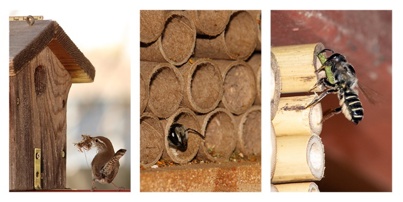
Artificial nest structures, such as birdhouses (left) or bee tubes (middle and right) require ongoing care and attention to ensure they don’t inadvertently encourage disease, attract predators, or harbor parasites.
Deciding whether to offer artificial nest boxes is much like choosing to install feeders. In a well-designed habitat filled with native plants and natural shelter, most wildlife will find the resources they need without additional help. However, many people enjoy offering nest boxes to support—and observe—the birds and other species they care about.
If you choose to provide nest boxes, it’s important to recognize that they come with responsibilities. Just like feeders, nest boxes must be maintained properly to ensure they are safe and beneficial. Regular cleaning and monitoring are essential to prevent the buildup of parasites, diseases, or problems with predators.
What to Avoid
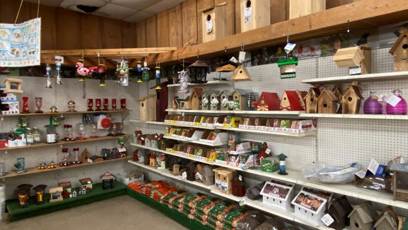
While decorative birdhouses with perches may look appealing, they are not ideal for native birds. In fact, perches can attract invasive species like the English (house) Sparrow, which compete aggressively with native birds for nesting sites. Native species don’t need perches, and in many cases, simpler is better.
To support the birds you want to attract, select nest boxes specifically designed for those species. Features such as the entry hole size and internal dimensions should be appropriate for the target species and help deter unwanted visitors.
If invasive birds such as English Sparrows or European Starlings begin using your nest boxes, you may need to remove the box temporarily or actively manage it to protect native birds.
Lastly, choose a nest box that is easy to open and clean. Well-constructed boxes include a hinged panel or removable side for periodic maintenance. This not only makes your job easier but also ensures a healthier, safer environment for the birds that use it.
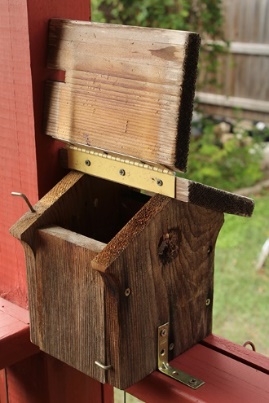
A well-designed bird box that is easy to clean.
When providing nest sites for native bees, it's important to avoid using treated wood or small wooden blocks with numerous holes. A chamber less than 6 inches deep will primarily produce male bees, as females lay male eggs at the back of the hole and female eggs at the front. If the hole is too shallow, like those found in bee blocks made from 4x4 lumber, the female won’t have enough depth to produce a balanced brood.
Additionally, clustering many holes in a small area can increase the risk of predators and parasites, allowing their impact to be magnified. Over time, nesting blocks used year after year also become infested with mites, which can significantly hinder breeding success.
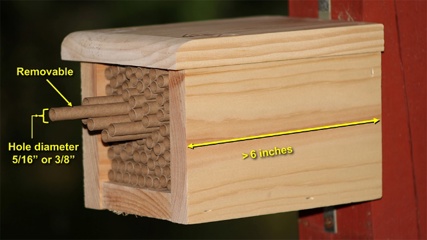
To address these issues, use a structure that is at least 6 inches deep and holds tubes for nesting chambers. Once the bees emerge, the tubes can simply be discarded, along with any mites or diseases that may have accumulated. The following year, place a box with new tubes in a different location to help prevent the buildup of pests and pathogens.
An even better option is to drill several holes (deeper than 6 inches) in cut sections of natural limbs and scatter them throughout your landscape. These will naturally decompose over time and disperse brood chambers thus reducing the concentration of parasites and disease. This method supports a more natural, self-sustaining system for native bees while minimizing the need for artificial intervention.
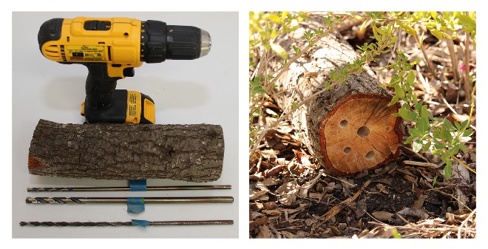
You can make native bee nesting chambers by drilling holes in cut limbs and placing them in your landscape.
To create these natural bee nesting sites, you will need a drill and several long drill bits of varying diameters (1/4", 5/16", and 3/8"). The size of the hole will determine which species of bees will use it, so it is important to have a range of sizes. To help gauge the depth, place a piece of tape on each drill bit at the 6.5" mark. Carefully drill a few holes that are at least 6 inches deep (preferably deeper) in sections of cut limbs, making sure to vary the diameters. Once the holes are drilled, scatter these sections throughout your landscape. Over time, the wood will naturally decompose, providing a safe and sustainable nesting site for native bees while reducing the risk of disease and parasites.
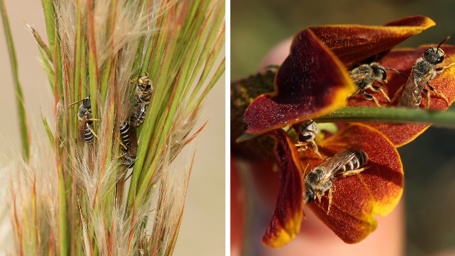 Ligated furrow bees sheltering in bushy bluestem (left) and beneath an upright prairie coneflower (right).